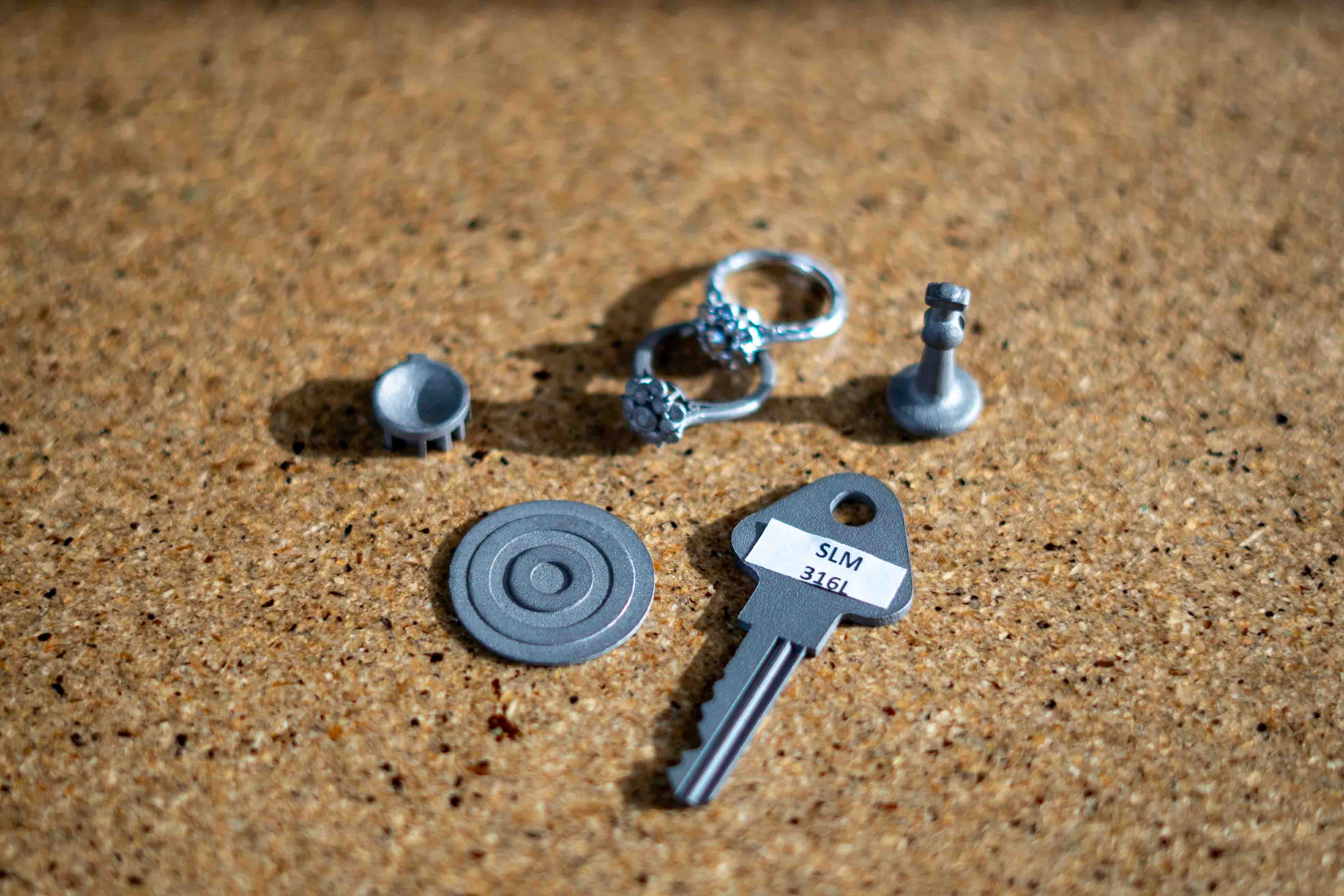




The choice between SLA vs SLM 3D printing is a strategic decision that separates high-fidelity aesthetic modeling from heavy-duty industrial engineering. While both technologies utilize laser-directed energy to achieve incredible...
Read More >3D Printing services
Design & Reverse Engineering
Additional Manufacturing
Industries we serve
3D files are created by many methods, each with their benefits and drawbacks. We utilise the following techniques to create high-quality 3D printable files that meet your design requirements.


3D Printing Service
Explore reliable and customizable 3D printing solutions tailored to your unique project needs.


3D Printing Technologies
Learn about cutting-edge techniques that power efficient and precise 3D printing.


Materials
Discover a variety of durable and high-quality 3D printing materials for every application.


Applications & Benefits
Understand the versatile uses and advantages of modern 3D printing technology.


About 3D Printing
Get insights into the world of 3D printing and how it’s transforming industries.


Our 3D Printing Design Engineering Solutions combine design knowledge, experience and expertise from multiple disciplines and the latest softwares to provide the source for your product design and development needs.
KAD3D uses the top of the line 3D modelling softwares best fit for your applications. With our highly experienced 3D engineers your idea can be tested and made come true.
Click here to try our material selection tool to help you find the best material for your project.


Reverse Engineering
Laser Kerf.


0.1 – 19.1 mm
Material Thickness.


790 x 384mm
Large parts.


Join 13,000 happy customers
checkout our application and benefits
The choice between SLA vs SLM 3D printing is a strategic decision that separates high-fidelity aesthetic modeling from heavy-duty industrial engineering. While both technologies utilize laser-directed energy to achieve incredible...
Read More >The comparison of FDM vs SLM 3D printing bridges the gap between desktop prototyping and aerospace manufacturing. FDM is a low-energy extrusion process, handling plastics at temperatures between 200°C and...
Read More >When evaluating FDM vs SLS 3D printing for business operations, “throughput” becomes the deciding factor. FDM is often a “one-at-a-time” process; each part must sit on the build plate, and...
Read More >From a design perspective, the CJP vs SLM 3D printing choice dictates the level of geometric freedom and labor involved after the print is complete. SLM requires rigorous “Thermal Stress...
Read More >The competition in SLA vs CJP 3D printing highlights the difference between surface-level perfection and internal color depth. Stereolithography (SLA) utilizes a UV laser to cure liquid photopolymer resin, producing...
Read More >The technical divergence in CJP vs SLS 3D printing begins with the method of particle cohesion. Selective Laser Sintering (SLS) is a high-energy process where a CO2 laser traces the geometry...
Read More >Choosing between CJP vs FDM 3d printing requires a strategic balance between structural durability and aesthetic detail. FDM is the industry’s functional workhorse, extruding molten thermoplastics to create rugged, end-use...
Read More >The distinction between MJF vs SLM 3d printing is fundamentally a matter of energy density and material phase. MJF works within the polymer realm, utilizing infrared heat to reach the...
Read More >The choice between SLA vs MJF 3D printing is a strategic trade-off between aesthetic precision and mechanical resilience. While Stereolithography (SLA) utilizes UV lasers to achieve unmatched micron-level detail in...
Read More >

Leverage over 30 years of expertise in 3D printing and additive manufacturing for industries like military, space, and commercial markets. Get an instant quote to kickstart your project now!