Manufacturers today face a constant challenge: producing high-quality parts in small quantities without driving up production costs. Traditional manufacturing methods such as injection molding or CNC machining are highly effective...
Read More >Our MJF 3D printing service produces durable, smooth, and highly detailed parts, perfect for functional prototypes and end-use products. With excellent strength, accuracy, and surface finish, MJF is ideal for engineering and industrial applications. Our MJF 3D print solutions ensure accuracy.


3D Printing Service
Explore reliable and customizable 3D printing solutions tailored to your unique project needs.


3D Printing Technologies
Learn about cutting-edge techniques that power efficient and precise 3D printing.


Materials
Discover a variety of durable and high-quality 3D printing materials for every application.


Applications & Benefits
Understand the versatile uses and advantages of modern 3D printing technology.


About 3D Printing
Get insights into the world of 3D printing and how it’s transforming industries.
Click here to try our material selection tool to help you find the best material for your project.


Fused Deposition Modelling (FDM) is one of the most common and affordable 3D printing technologies, perfect for creating strong and functional parts. It works by melting plastic filament and building objects layer by layer, making it great for prototypes, custom parts, and everyday items. FDM is known for its fast printing speeds, durability, and cost-effectiveness, making it ideal for both business and personal projects. Whether you need a replacement part, a unique design, or a prototype, FDM 3D printing offers a quick and budget-friendly solution.


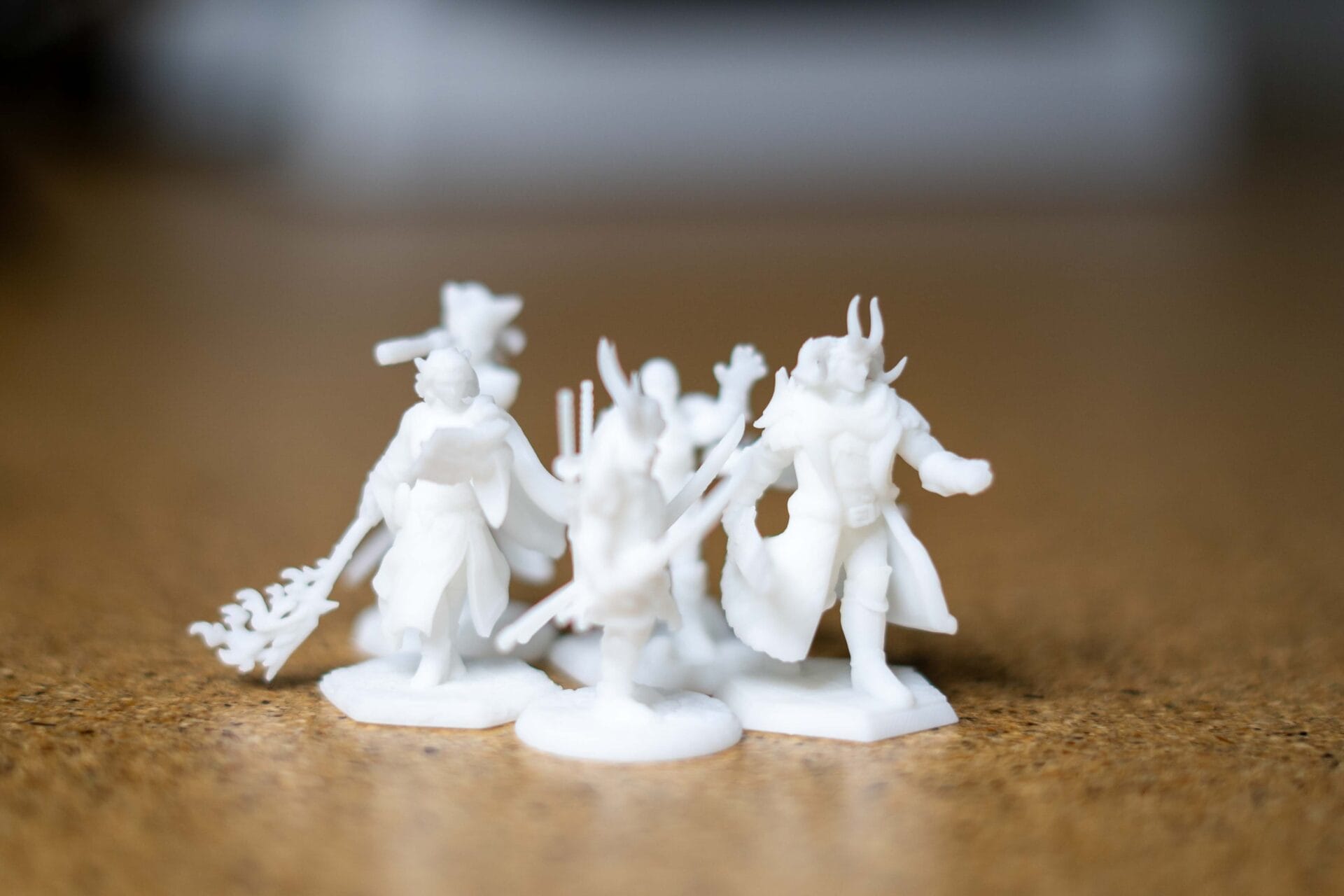
Stereolithography (SLA) is a 3D printing technology that creates smooth, detailed, and high-quality parts using liquid resin hardened by a laser. It’s perfect for intricate designs, jewellery, dental models, and prototypes that need a flawless finish. SLA printing captures fine details and offers materials that can be transparent, flexible, or highly durable, making it ideal for projects requiring precision and a professional look. If you need a sleek, high-detail custom part or prototype, SLA 3D printing is the perfect choice.


Selective Laser Sintering (SLS) is an advanced 3D printing technology that creates strong and durable parts by fusing powdered material with a high-powered laser. Unlike other 3D printing methods, SLS does not require support structures, allowing for complex and highly detailed designs to be printed with ease. The process uses nylon and other industrial-grade materials, making the final parts tough, lightweight, and resistant to heat, chemicals, and wear. SLS is widely used for functional prototypes, custom mechanical parts, and industrial applications where strength and durability are essential. This technology is ideal for engineers, manufacturers, and businesses looking for high-quality, production-ready parts without the cost of traditional manufacturing. Whether you need a strong custom part, a lightweight design, or a batch of durable prototypes, SLS 3D printing delivers professional results quickly and efficiently.


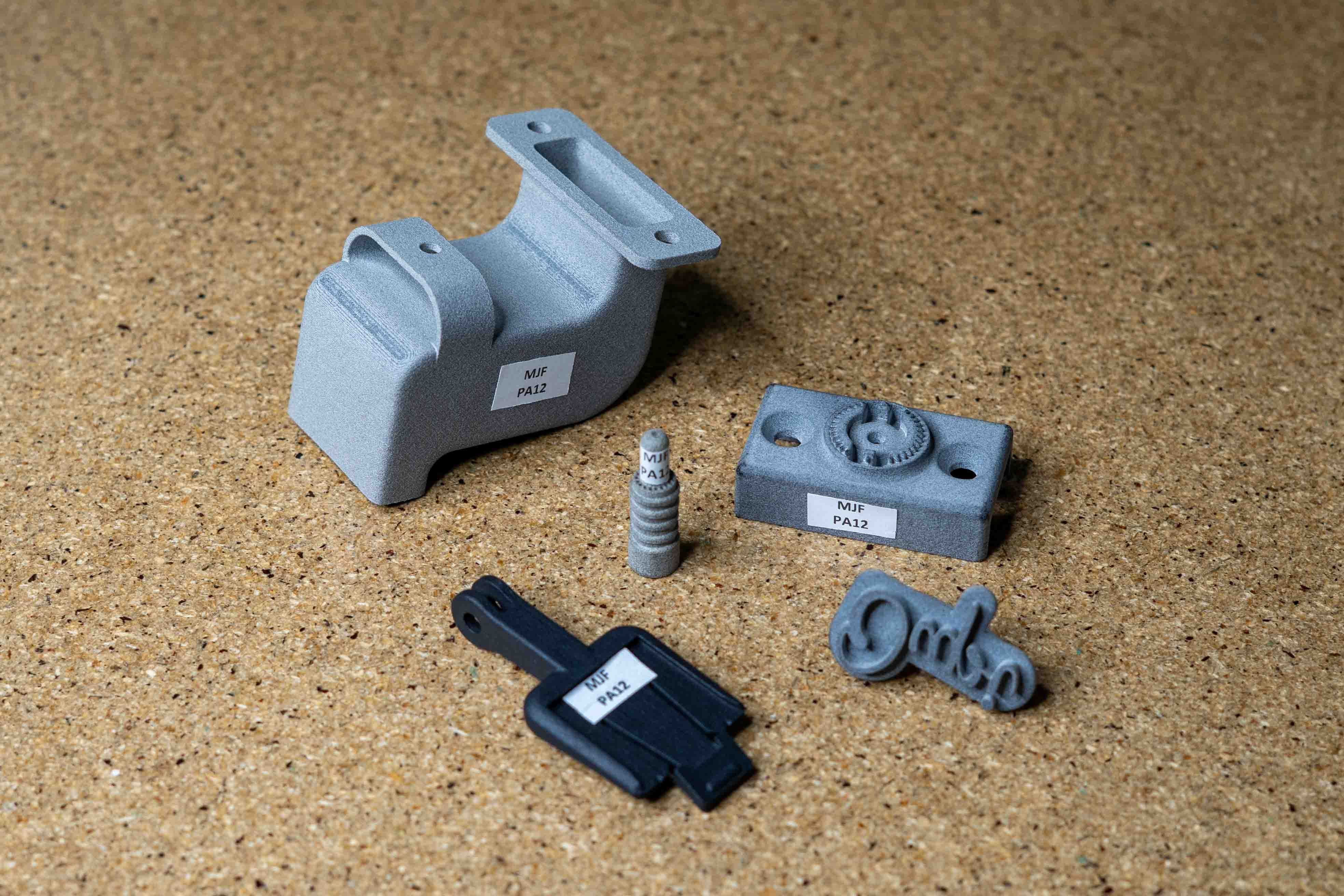
Multi Jet Fusion (MJF) is an advanced 3D printing technology that produces strong, durable, and highly detailed parts by fusing powdered material using a precision thermal process. Unlike other 3D printing methods, MJF creates exceptionally smooth, high-strength parts with consistent quality and fine details, making it ideal for functional prototypes, mechanical components, and production-ready parts. MJF stands out for its speed, accuracy, and ability to produce dense, high-performance parts with excellent surface finish and durability. It is commonly used in engineering, product development, and manufacturing where precision and strength are critical. Whether you need a robust prototype, end-use production parts, or intricate designs, MJF 3D printing delivers high-quality results efficiently and cost-effectively.


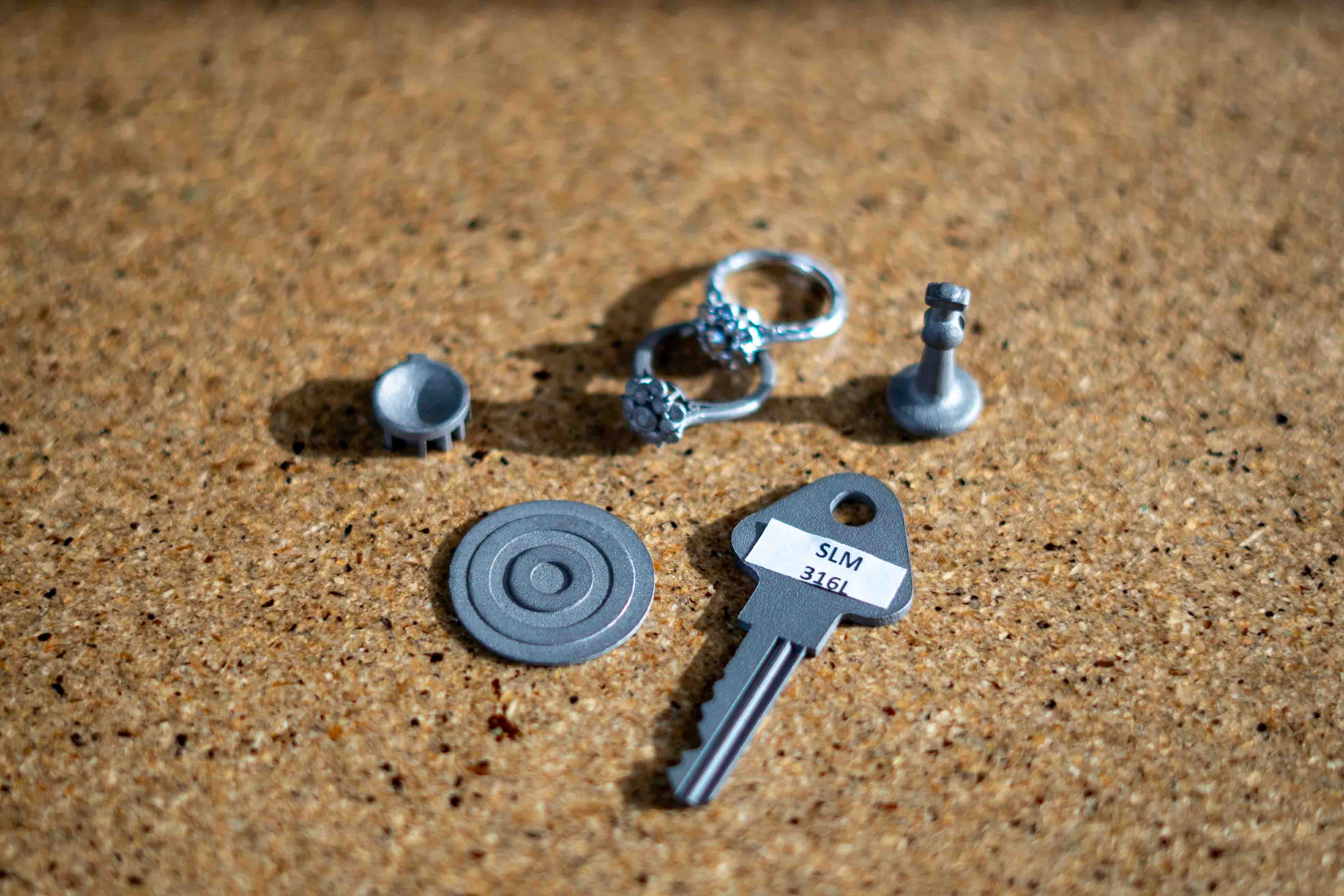
Selective Laser Melting (SLM) is an advanced metal 3D printing technology that creates strong, dense, and highly precise metal parts by fusing fine metal powder with a high-powered laser. Unlike traditional manufacturing, SLM produces complex geometries and high-performance components with exceptional strength, accuracy, and durability, making it ideal for aerospace, automotive, medical, and industrial applications. SLM excels in speed, material efficiency, and mechanical performance, delivering fully dense, production-ready parts with superior structural integrity. We offer SLM 3D printing in stainless steel, aluminium, and titanium, providing lightweight, corrosion-resistant, and high-strength solutions for engineering, product development, and manufacturing. Whether you need precision prototypes, functional components, or complex metal designs, SLM 3D printing ensures high-quality, efficient, and cost-effective results.


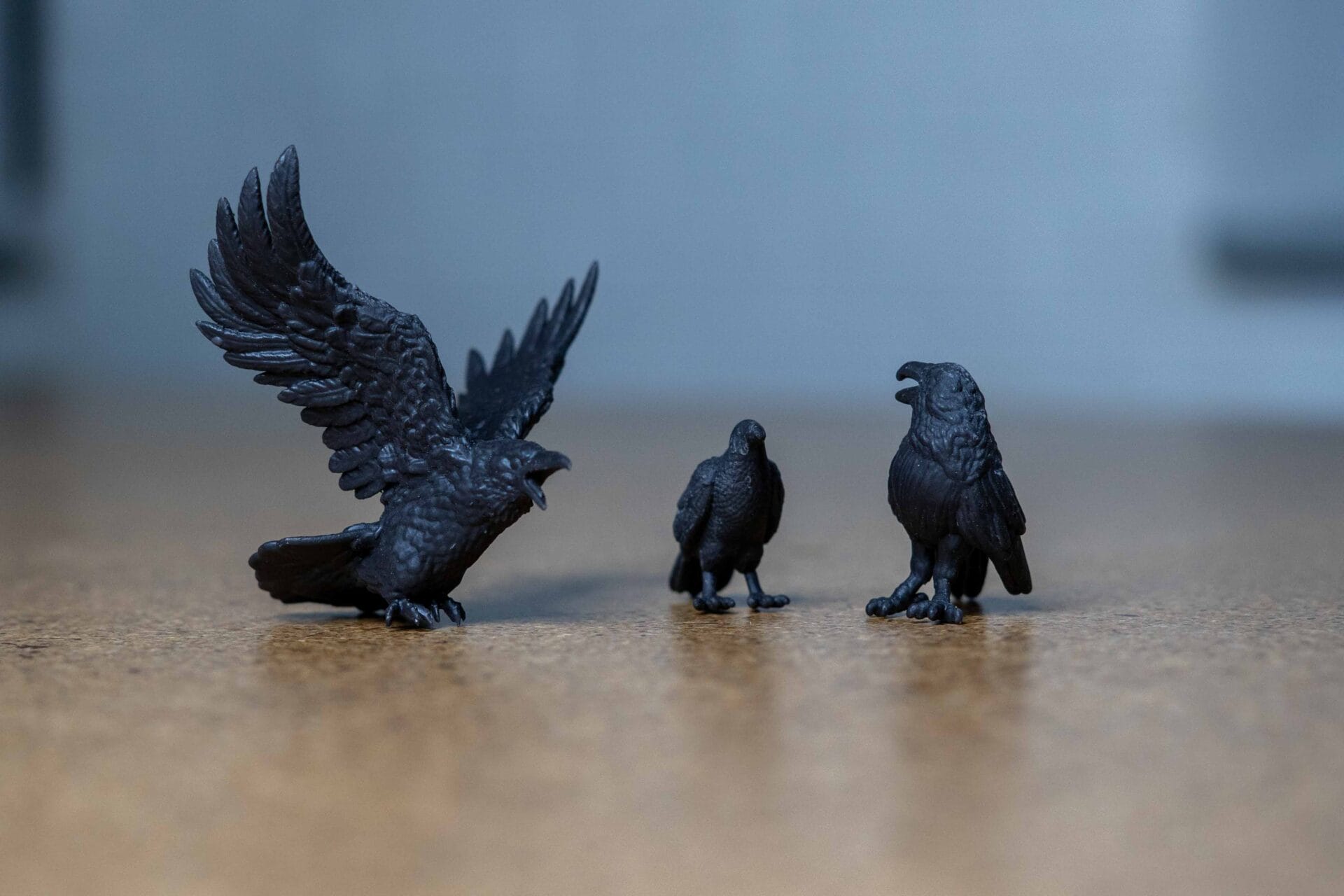
ColourJet Printing (CJP) is an advanced 3D printing technology that produces full-colour, highly detailed, and visually striking parts by binding powdered material layer by layer. Unlike other 3D printing methods, CJP creates vibrant, photo-realistic models with smooth gradients and intricate details, making it ideal for architectural models, product prototypes, figurines, and concept designs. CJP stands out for its speed, cost-effectiveness, and ability to print in full colour without additional painting. Using gypsum-based materials, it delivers lightweight yet detailed models perfect for presentation, marketing, and visualisation. Whether you need eye-catching product prototypes, detailed anatomical models, or lifelike figurines, CJP 3D printing offers a fast, precise, and cost-effective solution.


Unlock the full potential of
MJF 3D printing technology
Multi Jet Fusion (MJF) is HP’s proprietary 3D printing process.
In MJF, parts are built by jetting a binding agent onto thin layers of polymer powder particles (typically nylon) and then sintering them using an IR heat source.Our MJF 3D printing services ensure your parts meet strict manufacturing standards.
MJF produces functional plastic parts with isotropic mechanical properties that can be used for detailed prototyping or end-use low-volume production, while advanced technologies like SLA and SLS are also available for projects requiring ultra-fine detail and high durability.
checkout our application and benefits
Manufacturers today face a constant challenge: producing high-quality parts in small quantities without driving up production costs. Traditional manufacturing methods such as injection molding or CNC machining are highly effective...
Read More >Every successful product begins with an idea, but transforming that idea into a working product requires experimentation, testing, and refinement. This is where prototyping becomes essential. For designers, engineers, and...
Read More >In modern manufacturing, speed has become just as important as quality. Businesses that can design, produce, and deliver products faster gain a strong competitive advantage. However, traditional manufacturing methods often...
Read More >In product design, the first look and feel of a prototype can make or break a concept. While technologies like FDM and MJF excel in strength and functional performance, they...
Read More >For many years, one of the biggest limitations of additive manufacturing was the issue of porosity. Traditional 3D printing methods often produced parts with tiny microscopic gaps between layers. These...
Read More >Modern manufacturing is constantly evolving, and one of the most significant changes in recent years has taken place quietly on factory floors around the world. While attention often focuses on...
Read More >In recent years, additive manufacturing technologies such as 3D printing have captured significant attention across the manufacturing industry. However, despite the rapid growth of these new technologies, precision CNC machining...
Read More >In modern architecture and urban development, visualizing a project goes far beyond creating a beautiful digital render. While computer-generated images can showcase a building from multiple angles, they still remain...
Read More >In modern manufacturing and product development, precision plays a critical role in determining whether a part performs correctly or fails during assembly. One of the most important concepts in additive...
Read More >

MJF stands for Multi Jet Fusion, a technology developed by HP that builds parts by spreading thin layers of nylon powder and then using precision inkjet heads to deposit fusing agents onto each layer, which are then activated by an infrared heat source. What makes MJF 3D printing technology different from older powder-based methods is that it fuses the entire layer at once rather than tracing it with a laser, which means faster build times and more consistent results across the whole part.
MJF 3D print is genuinely well-suited to functional, real-world applications rather than just prototypes. Because parts come out strong in all directions and with a good surface finish, they hold up well in engineering, automotive, robotics, and industrial settings. If you need something that actually works under load, fits into an assembly, or needs to handle pressure or repeated use, MJF 3D printing technology is one of the more reliable choices available in additive manufacturing today.
At KAD3D, MJF 3D printing is used to produce high-quality, production-ready parts with complex geometries and no need for support structures, ensuring efficient and consistent results. Our team manages the full process from printing to post-processing, delivering parts ready for use. Standard lead time is approximately 2 weeks, with an express option of 3–5 business days available subject to availability—please email us for urgent requests.
Both MJF and SLS use nylon powder, usually PA12, and are strong options for functional parts, but MJF 3D printing technology generally produces smoother surfaces, crisper edges, and more uniform mechanical properties across the build. SLS has been around longer and offers a broader range of specialty materials in some systems, but for most engineering and production applications MJF 3D print tends to be faster and more cost-effective per part, especially when printing multiple components in a single run.
Leverage over 30 years of expertise in 3D printing and additive manufacturing for industries like military, space, and commercial markets. Get an instant quote to kickstart your project now!