



3D printing has become a powerful manufacturing solution for engineering, prototyping, and end-use production. Among industrial technologies, MJF vs SLS nylon processes are the most popular, especially when producing strong nylon PA materials. Both MJF printing vs SLS systems stand out for their strength, speed, and ability to produce high-quality functional parts.
If you’re comparing 3D printing MJF vs SLS to choose the best technology for your business or production workflow, this detailed guide covers everything: print quality, strength, accuracy, materials, cost, speed, applications, and more.
Whether you need high-detail prototypes or strong engineering parts, this comparison will help you decide which technology fits your needs especially when evaluating mjf nylon vs sls nylon in real-world use.
What is MJF 3D Printing?
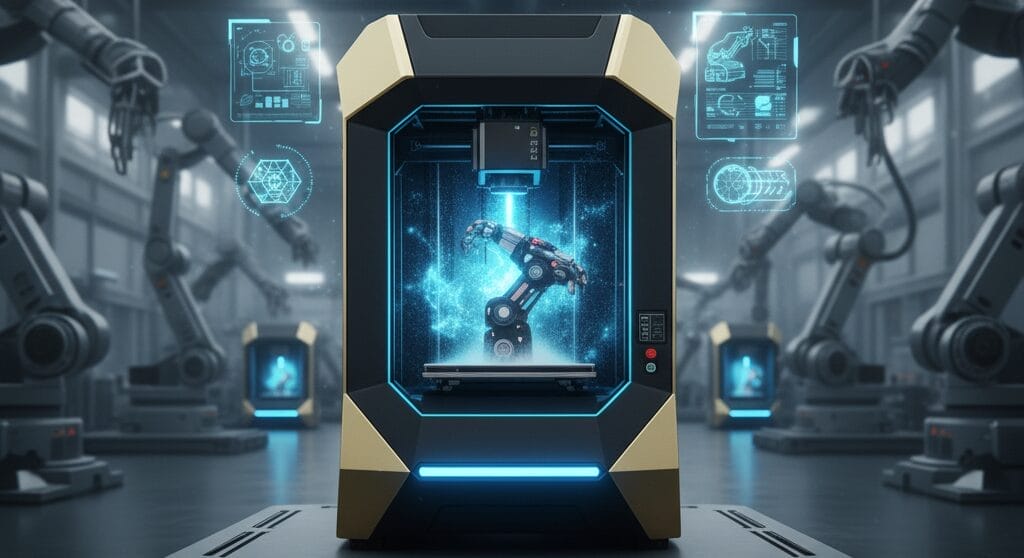
MJF 3D printing is an industrial 3D printing technology developed by HP. It uses a combination of inkjet fusing agents and infrared heat to fuse nylon powder into solid parts. In many industrial cases, MJF vs SLS nylon PA12 comparisons show MJF delivering smoother, more consistent results.
Instead of a laser (like SLS), MJF uses precision printheads to deposit fusing and detailing agents. This gives MJF parts excellent consistency, fine details, and smooth surfaces.
How MJF Works
A thin layer of nylon powder is spread across the build platform.
Inkjet heads apply a fusing agent (for solid areas) and a detailing agent (for sharp edges).
Infrared lamps pass over the layer, melting the powder where needed.
The process repeats, building the part layer-by-layer.
Parts are cooled, cleaned, and ready for finishing.
Advantages of MJF
Fast production, ideal for batch parts
Excellent accuracy and dimensional consistency
Smooth, uniform surface finish
Great strength and isotropic mechanical properties
High detail compared to SLS
Limitations of MJF
Colors are limited (mostly grey/black unless post-dyed)
Equipment is expensive
Powder handling requires trained staff
Slightly more expensive than basic SLS printing vs SLA alternatives (in small runs)
MJF is ideal for functional prototypes, mechanical parts, enclosures, hinges, gears, clips, and short-run manufacturing especially where sls nylon vs mjf nylon consistency matters.
What is SLS 3D Printing?

SLS 3D printing is one of the oldest and one of the most reliable industrial 3D printing technology. It uses a high-power laser to fuse nylon powder layer-by-layer. Because unsintered powder surrounds the part during printing, no supports are needed, allowing extremely complex shapes.
How SLS Works
A layer of nylon powder is spread evenly in the build chamber.
A high-power laser traces and sinters the part’s cross-section.
Each new layer is sintered to the previous one.
After printing, the part cools inside the powder bed.
Loose powder is removed during post-processing.
Advantages of SLS
Strong, durable nylon parts
No support structures needed
Large build sizes
Excellent for mechanical, functional components
Well-established industrial reliability
Limitations of SLS
Surface is grainier compared to MJF
Details may not be as sharp as MJF
Slower cooling times
Post-processing (depowdering) required
SLS is widely used for engineering prototypes, mechanical parts, housings, brackets, and complex end-use parts a common choice for sls vs mjf printing needs.
MJF vs SLS 3D Printing: Detailed Comparison
If you’re evaluating MJF vs SLS printing, here’s a deep dive into quality, strength, speed, cost, and materials so you can choose the right technology.
Print Quality: MJF vs SLS
MJF Print Quality
Very smooth and uniform surface
Sharper edges than SLS
Better fine detailing
Great for cosmetic and functional parts
SLS Print Quality
Slightly grainy surface
Good for functional parts
Lower detail sharpness compared to MJF
Ideal for rugged industrial parts
Print Strength: SLS vs MJF
MJF Strength
Excellent mechanical performance
Strong, consistent parts
Better isotropic strength (especially in mjf vs sls strength tests)
Ideal for hinges, gears, load-bearing components
SLS Strength
Strong and durable
Great for mechanical stress
Slightly less consistent than MJF but still excellent
Print Speed: MJF vs SLS Printing
MJF Speed
Very fast printing
Designed for high-volume production
Great for batch manufacturing
SLS Speed
Slower build cycles
Long cooling times
Better for prototypes than mass production
Surface Finish and Detail
MJF Finish
Smooth
Clean edges
Better color consistency
Requires minimal post-processing
SLS Finish
Rough/matte texture
More noticeable powder grain
Needs finishing for cosmetic use
Material Options: MJF vs SLS
MJF Materials
Nylon PA12
Nylon PA11
Glass-filled nylon (PA12 GF)
TPU (flexible material)
Full-color MJF (on newer machines)
SLS Materials
Nylon PA12
Nylon PA11
Nylon 6
TPU, TPE
Glass- or aluminum-filled nylons
MJF vs SLS for Miniatures and Models
MJF
Better detail sharpness
Smoother surfaces
Great for functional prototypes, enclosures, and mechanical shapes
SLS
Rougher textures
Not ideal for tiny details
Better for large, functional components
MJF vs SLS for Industrial & Business Use
Choose MJF if you need:
Fast production
High detail + strong mechanical properties
Consistent, smooth surfaces
Batch parts or short-run manufacturing
Functional prototypes with aesthetic appeal
Choose SLS if you need:
Large, complex engineering parts
Rugged, durable, industrial-quality components
Affordable prototyping
Complex geometries without supports
Material flexibility and reliability
Full Technology Overview
MJF
How it works: Fusing agents + IR heat
Strengths: Fast, strong, detailed
Cost: Higher equipment, mid material cost
Finish: Smooth, clean
Best for: Production parts
SLS
How it works: Laser sintering
Strengths: Durable, support-free, versatile
Cost: Medium-high machine + powder
Finish: Slightly rough
Best for: Industrial prototyping
SLS vs MJF: Side-by-Side Comparison
| Feature | MJF | SLS |
|---|---|---|
| Quality | Excellent | Very Good |
| Detail Level | High | Medium |
| Strength | Very High | High |
| Speed | Very Fast | Moderate |
| Surface | Smooth | Grainy |
| Best For | Production & engineering | Complex industrial parts |
FAQs
Which is better, MJF vs SLS?
MJF is generally better when your priority is surface finish, fine detail, and fast batch production. It produces cleaner textures, more consistent color, and highly accurate features. SLS is better for large, complex geometries and rugged industrial parts. Its powder-bed system handles overhangs and bulky shapes more easily.
Is MJF stronger than SLS?
Yes. MJF usually provides higher isotropic strength (equal strength in all directions) because the fusion process is more uniform. SLS parts are strong too, but their mechanical properties can vary slightly due to the sintering method.
Is MJF more expensive than SLS?
The machines and technology behind MJF are more expensive, but the cost per part is often cheaper especially when you’re producing many units at once. Its speed and efficiency reduce overall production cost.
Which has better quality, MJF or SLS?
MJF produces smoother surfaces, crisper edges, and more uniform detailing. SLS has a slightly rough, grainy texture but offers excellent durability and is great for functional prototypes and industrial components.
For 3D printing projects, quotes and more information visit KAD 3D